At a glance
Kpow and Kafdrop are scored here on the same five criteria, 50 points in all: Kpow 44 out of 50, Kafdrop 23 out of 50. Kpow takes its best score on Access control and audit (10 out of 10) and its lowest on Cost as teams grow (7 out of 10). Cost a year: $13,500 licence for 3 clusters, plus $2,880 in ops. Kafdrop takes its best score on Cost as teams grow (10 out of 10) and its lowest on Access control and audit (0 out of 10). Cost a year: $0 licence, about $11,520 in operator time (this page's estimate).
Kpow vs Kafdrop, compared
Kpow meets 5 of 6 requirements on this page. 2 rows are not a yes or no question.
Key takeaway
Kafdrop is free and there is no tier above it. It has no authentication and no access control in the product, the feature request was closed as not planned in February 2026, and the documented answer is a reverse proxy in front. Its load-time problem is a consumer group problem rather than a topic-count one: one cluster carried 5,566 groups. Running both is normal, because Kafdrop on a dev cluster costs nothing. Kpow by Factor House is licensed per cluster from 4,500 US dollars, with 100 users included.
Kpow live demo
See Kpow in a working Kafka environment
You have seen how Kpow compares on paper. Open the live demo to test the workflows your platform team will depend on during an incident.
Built for platform and data teams managing shared Kafka clusters.
Try the Kpow demoWhat is Kafdrop?
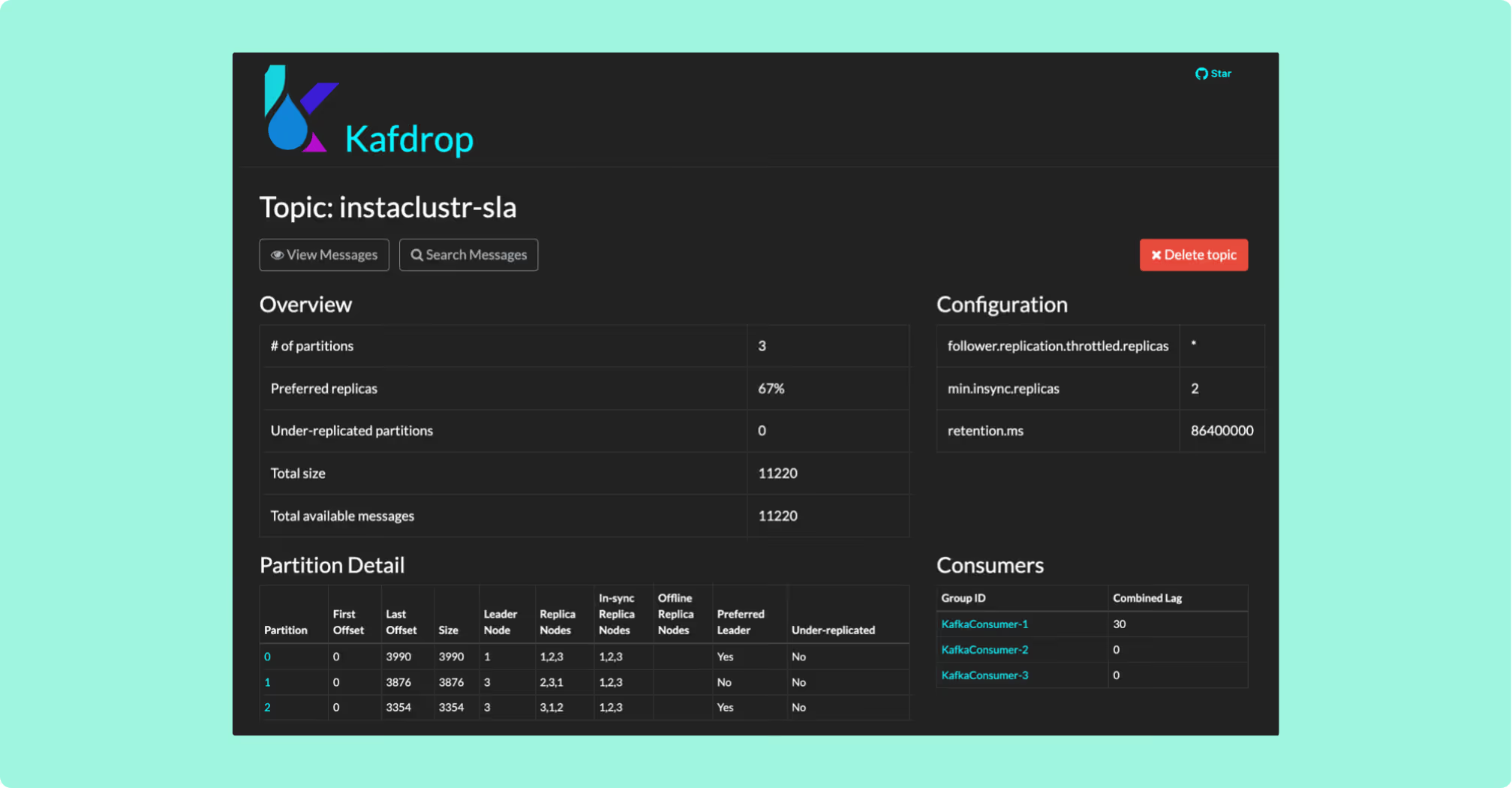
Kafdrop is an open-source Kafka UI built on Spring Boot and licensed Apache 2.0, from the obsidiandynamics project. It runs as a stateless Java process speaking the standard broker protocols with no backend datastore of its own, which is what makes it a one-line Docker start. A ZooKeeper connection has not been required since Kafdrop 3.10.0, and cluster information now comes back through the Kafka admin API.
- topics and partition state
- message inspection in JSON, plain text, Avro and Protobuf
- consumer groups with combined and per-partition lag
- creating, editing and deleting topics
Inside that scope it is good: light, fast on a single cluster, and holding no state, so there is nothing to back up. It is on most shortlists of best Kafka management tools for that reason. The project is also alive, which is worth stating because the usual criticism of it is the wrong one: the repository is not archived, community feature work was merged in August 2026, and the codebase tracks Spring Boot 4.1 and Java 25. What has not moved in years is the layer that decides whether a tool can be pointed at a production cluster.
What is Kpow?
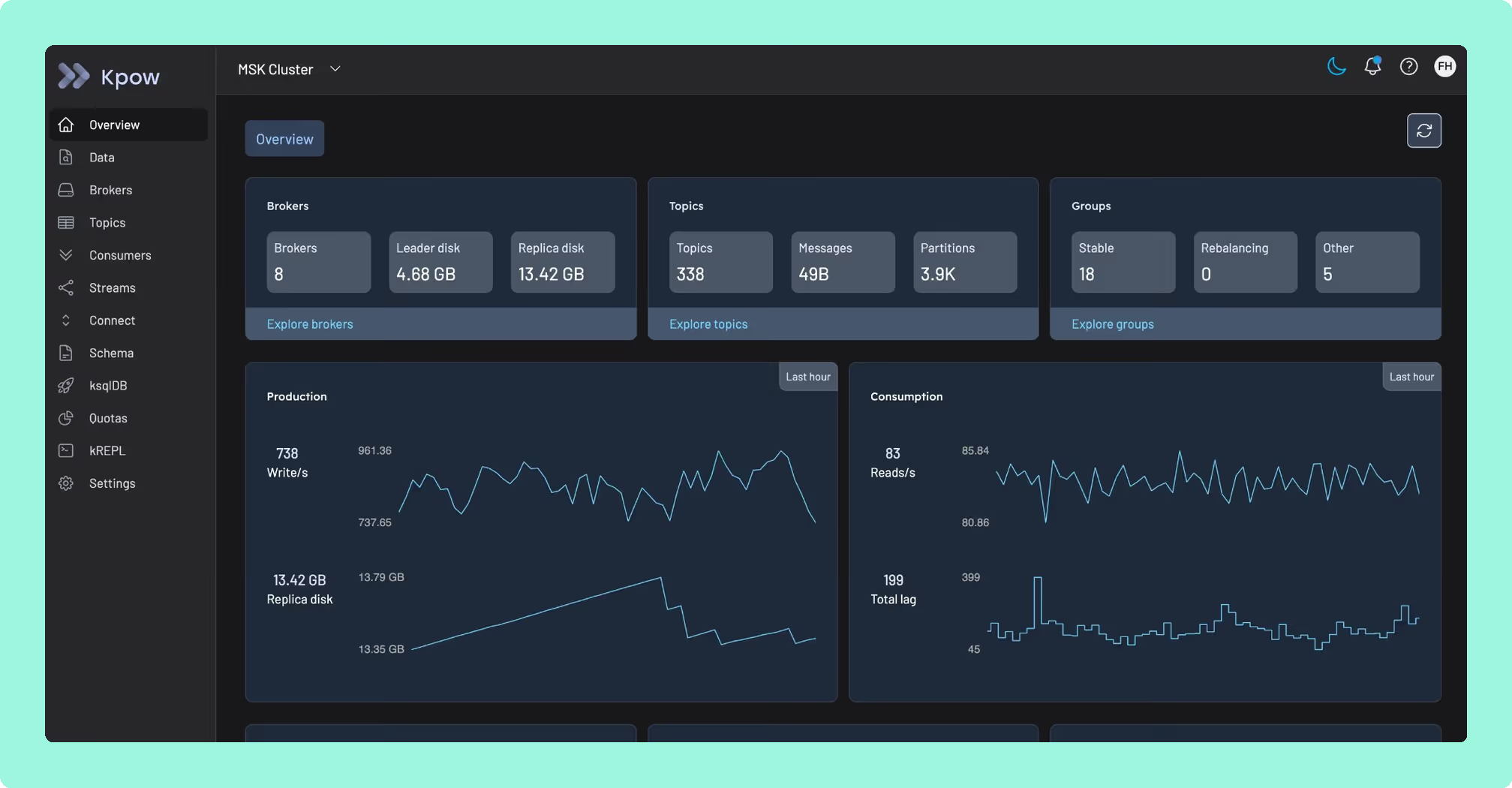
Kpow by Factor House is a commercial engineering toolkit and UI for Apache Kafka. It runs against whatever cluster you already have: self-managed Kafka, Amazon MSK, Confluent Cloud, Redpanda, Aiven and Instaclustr. It is a single stateless JVM container configured entirely through environment variables, with no external database, no sidecar and no persistent volume, storing its telemetry in internal Kafka topics on the cluster it is already monitoring. One instance manages up to 12 clusters.
What is the official 2026 pricing of Kpow and Kafdrop?
The two pricing units are not comparable, and saying so is more useful than pretending otherwise. Kafdrop costs nothing: Apache 2.0, no commercial edition above it, no support contract to buy, and no seat count anywhere. Kpow is licensed per cluster and the price is published: Community Edition is free for up to 3 clusters and 10 users, and Enterprise starts at 4,500 US dollars per cluster with 100 users included, after a 30-day trial that takes no credit card.
Per cluster rather than per user is the part that decides a budget. Five engineers on one production cluster and fifty on that same cluster cost exactly the same on Kpow, so growing the platform team is not a procurement event. On Kafdrop both teams pay nothing and both share one instance with no accounts on it, so the fiftieth engineer is not a line item; that engineer is a problem of a different kind. The cost of the free tool is operator time: the reverse proxy in front of it, the deserialisation format set for each topic by hand, and the hours spent working around the parts it does not do.
Where does each one run out?
The scoring is the same on both sides: five criteria, 10 points each, 50 in all, with every criterion counting once. Nothing sits behind a multiplier, so a total is the sum of its five marks and a reader can recompute it. The five are cost as teams grow, deployment footprint, support and maintenance, access control and audit, and multi-cluster reach, because those are the questions a Kafka interface is actually measured against after the first month: a second cluster, an access review with a date on it, an upgrade nobody owns, and a bill that moves when the team does. The widest gap between the two marks is on access control and audit, where Kpow marks 10 and Kafdrop marks 0. The marks come from the same matrix used on every comparison on this site, so a tool scores the same here as it does anywhere else, and the reason behind each mark is in the card below, under Why these scores.
The dependency figures in the cards below were read on 24 September 2026 from each project’s published release artefact and matched against the NVD and GitHub advisory databases, so they move whenever a release or an advisory lands. Self-hosting is not the risk on this page. Both run in your own infrastructure. The question is who rebuilds the image when a dependency advisory lands.
 Rank 1
 Kpow
44 out of 50 Total
Try Kpow in the live demo No signup needed.
- Cost a year
- $13,500 licence for 3 clusters, plus $2,880 in ops
- Access control
- RBAC, SSO, masking and an audit log in the product
- Clusters per instance
- Up to 12, from one stateless container
- Cost as teams grow
- 7 out of 10
- Deployment footprint
- 9 out of 10
- Support and maintenance
- 9 out of 10
- Access control and audit
- 10 out of 10
- Multi-cluster reach
- 9 out of 10
Why these scores for Kpow
- Cost as teams grow 7 out of 10
- Published per cluster, Enterprise from $4,500 with 100 users, Community Edition free for 3 clusters and 10 users with RBAC, masking and audit held back. On this page, five engineers and fifty on one cluster cost the same.
- Deployment footprint 9 out of 10
- One stateless container, environment variables, no database, sidecar or volume. This page records that Kafdrop is the lighter of the two, which is what keeps it at 9 rather than 10.
- Support and maintenance 9 out of 10
- Email support and an Enterprise support SLA, shipping continuously. This page gives priority support on Enterprise, community Slack and docs on Community Edition.
- Access control and audit 10 out of 10
- RBAC, SSO, server-side masking and an audit log of user actions in the product. On this page, permissions are granular across every configured resource, including ksqlDB, Kafka Connect and the schema registry.
- Multi-cluster reach 9 out of 10
- Up to 12 clusters per instance across MSK, Confluent, Redpanda, Aiven and others, held at 9 by the per-instance cap. This page sets one instance against Kafdrop’s one instance per cluster.
What sits above that is the governance layer: role-based access control and multi-tenancy, single sign-on, server-side data masking, an audit log of user actions, and search across topics, so an engineer can find the message their service just produced without writing a throwaway consumer. Kpow permissions are granular across every configured resource, including ksqlDB, Kafka Connect and the schema registry, rather than stopping where Kafka’s native ACLs stop.
Kpow, like Kafdrop, is tooling that runs on top of a cluster rather than the thing that runs it. The difference on a regulated estate is that the governance layer is already inside the product, not bolted on with a reverse proxy afterward.
Staying patched: the image built on 5 August 2026 bundles 311 libraries. The argument here is contractual accountability rather than speed.
What it costs a year: published, plus the cost of running it. Enterprise is 4,500 US dollars per cluster a year with 100 users included, so dev, staging and production are 13,500, and this page’s estimate for one stateless container with no database, sidecar or volume beside it is two engineer-hours a month at 120 US dollars an hour, 2,880 a year, which is 16,380 all in. Kafdrop is the cheaper of the two at twenty engineers and still cheaper at a hundred, because neither ladder has a seat meter in it. What the difference buys is the governance layer: accounts, roles, masking and an audit trail inside the product instead of a proxy in front of it.
Compare Kpow vs Kafbat UIKpow vs AKHQ
23 out of 50 Total
- Cost a year
- $0 licence, about $11,520 in operator time (this page's estimate)
- Access control
- None in the product. An NGINX reverse proxy in front
- Clusters per instance
- One per deployment
- Cost as teams grow
- 10 out of 10
- Deployment footprint
- 10 out of 10
- Support and maintenance
- 2 out of 10
- Access control and audit
- 0 out of 10
- Multi-cluster reach
- 1 out of 10
Why these scores for Kafdrop
- Cost as teams grow 10 out of 10
- Apache 2.0, the whole product, no seat or cluster cap. This page leaves nothing to pay, no commercial edition above it, and the tenth engineer is not a line item.
- Deployment footprint 10 out of 10
- One stateless Java process with no separate datastore. On this page, that is a one-line Docker start, holding no state, so there is nothing to back up.
- Support and maintenance 2 out of 10
- Newest release 4.2.0 of July 2025, KRaft unsupported, GitHub issues only. This page records three KRaft failure reports closed as not planned, and no commercial support to buy.
- Access control and audit 0 out of 10
- No authentication, no RBAC, no SSO, write operations exposed. On this page, the request was closed as not planned in February 2026, and the read-only toggle has been an open pull request since 2020.
- Multi-cluster reach 1 out of 10
- One cluster per deployment. This page gives one instance per cluster, and no multi-cluster view.
Kafdrop’s scale limit is a consumer group cost rather than a topic-count one. It takes over 30 minutes to load topic and partition information against a cluster of about 1,010 topics and 2,000 partitions, and the dominant cost is enumerating its 5,566 consumer groups on every load. Disabling that one step brings the interface back under a minute.
Authentication: none in the product. The request was opened in January 2026 and closed as not planned six weeks later, and the documented answer is an NGINX reverse proxy.
Write operations: exposed, and the read-only toggle has been an open pull request since 2020.
Scope: no message search or filtering by key or value, no multi-cluster view, and no native MSK IAM authentication.
KRaft: three reports of failure against KRaft clusters closed as not planned, and Kafka 4.0 runs without ZooKeeper at all.
A reverse proxy is perimeter security, and it sits outside the Kafka security architecture rather than inside it. It costs money, and on a single dev cluster that is the wrong trade, because there is nothing there for a governance layer to govern.
Staying patched: 4.3.0 shipped on 31 August 2026 bundling Tomcat 11.0.22, which had carried three critical advisories since 25 August, six days earlier. One of them, CVE-2026-65905, scores 9.8 and is an authentication bypass, and all three are still in the current release. Three releases have shipped in two years. Only 66 of its 118 bundled jars resolve to a Maven coordinate, so those counts are floors rather than totals.
What it costs a year: nothing to licence, because Apache 2.0 has no edition above it, so the whole of the spend is operator time. This page’s estimate rather than a vendor price: eight engineer-hours a month at 120 US dollars an hour, 11,520 a year, covering a deployment per cluster, the NGINX proxy in front of each one that this product does not ship, the message encoding set per topic by hand and the consumer group load problem above. That figure does not move with headcount, and no part of it can be spent on authentication, because there is none in the product to buy at any team size.
How do you switch, or run both?
There is nothing to decommission. Kafdrop holds no cluster state, so removing it is deleting a container. What has to move is the thing in front of it: the auth proxy or gateway is re-pointed rather than rebuilt, and the per-topic deserialisation settings are configuration rather than product state. Teams rarely leave on a preference; they leave on a trigger, and it is usually one of five.
- KRaft: the cluster moved off ZooKeeper and the UI did not follow.
- Authentication: somebody has to answer who looked at what, and there are no accounts to answer with.
- Message search: finding one message by key stops being something anybody can do by eye.
- MSK IAM: the broker expects IAM credentials and the UI cannot present them.
- Consumer group count: the page load crosses from seconds into minutes.
Until one of those arrives, running both is fine, and it is what most teams actually do.
Which should you pick?
Kpow by Factor House is the pick wherever more than one person needs access, scoring 44 against Kafdrop’s 23, because Kafdrop has no authentication in the product and the request for it was closed as not planned in February 2026. Kafdrop scores 10 on both cost and deployment footprint, and stays a reasonable free viewer on a development cluster nobody audits.
Take Kafdrop if:
- you are working solo, or against a dev cluster or a sandbox
- none of the five triggers above has bitten yet
- a licence would buy nothing you can point at
Take Kpow if:
- the cluster is production with more than a handful of people on it
- anything on it is audited, so accounts and an audit trail are the requirement
- there are several clusters, or one with a large number of consumer groups
The second case stops being about features and becomes a question about accounts, about who is allowed to do what, and about being able to show it afterwards, which is what RBAC for Kafka and an audit log are for. A shared interface behind a reverse proxy produces neither.
Where that leaves the rest of the free field is set out in the best free Kafka UI tools, and Kafka RBAC tools ranks what can put accounts in front of a cluster without a proxy doing the work.
We model our company on JetBrains who make IntelliJ. They make phenomenal tools for engineers and they generally have the community version, which is really well featured and free, and it gives engineers great tools to be effective in what they're doing. And then they've got the pro version or the enterprise version which companies can pick up.
Derek Troy-West, Co-founder and CEO of Factor House
What happens when nobody knows who read the record?
Kafdrop earns its spot on plenty of shortlists honestly. It’s light, fast on a single cluster, and holds no state of its own, so there’s nothing to back up. The project is alive too: community feature work merged in August 2026, the codebase tracks Spring Boot 4.1 and Java 25, and it hasn’t needed a ZooKeeper connection since version 3.10.0.
However, authentication and scope both stop at what Kafdrop was built to be. There’s no authentication in the product at all: a feature request for it was closed as not planned in February 2026, and the documented answer is an NGINX reverse proxy in front. Write operations are exposed with no way to turn them off; a read-only toggle has been an open pull request since 2020. And there’s no message search or filtering by key or value, and no multi-cluster view. Kpow answers each of those directly: role-based access control and single sign-on sit in the product, so there’s no proxy to bolt on afterward; granular permissions reach every configured resource, including ksqlDB, Kafka Connect and the schema registry, so who can write is a role rather than a default; and search across topics finds a message without anyone writing a throwaway consumer, from one instance that already reaches up to 12 clusters.
It also keeps a record of who touched what: server-side data masking and a full audit log of user actions ship in the product on Enterprise, running from a single stateless container with no database, sidecar or persistent volume to add. The Community Edition is free for up to 3 clusters and 10 users, which is enough to start on Kpow and find out who read that record. Kafdrop can tell you what’s in the topic. It can’t tell you who looked.
How these tools were scored
Every option is scored from 0 to 10 on each criterion, from the evidence and sources this page cites, and the reason for each score is on its card. Each criterion counts once, for a total out of 50. This page is published by Factor House, which makes Kpow. Every option is scored on the same rubric and the same sources: Kpow's per-criterion scores are set the same way as every other option's and are not adjusted, and the weights apply to every option alike. Kpow ranks first on its total of 44 out of 50. The other options follow by total.